When the Rash Isn't the Reaction: Disulfiram, Contact Dermatitis, and the Rubber in Your Everyday Life
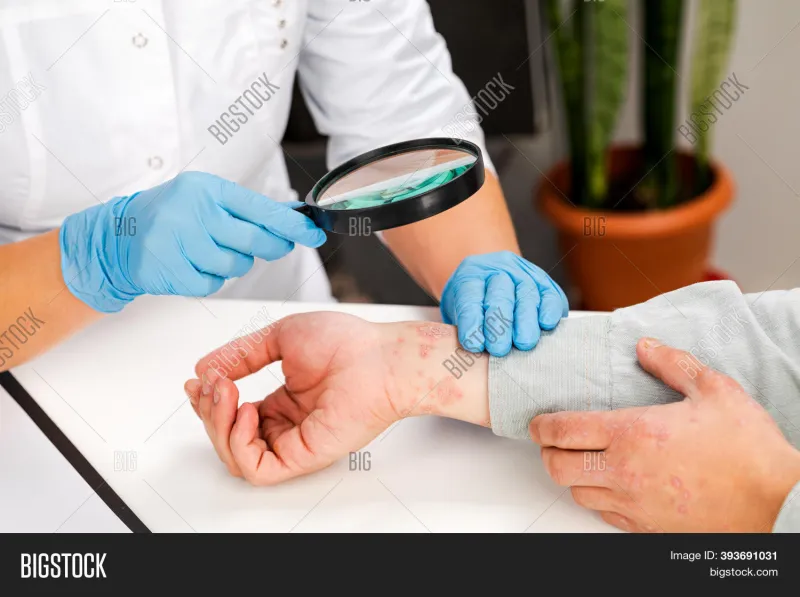
Photo: person examining itchy skin rash on hands wearing rubber gloves, via static2.bigstockphoto.com
Most patients who begin disulfiram therapy learn quickly about the dangers of hidden alcohol — the mouthwash, the vanilla extract, the dessert sauce. Far fewer are warned about a completely different kind of reaction: one that has nothing to do with drinking at all. For a small but meaningful share of patients, disulfiram itself behaves as a contact allergen, and the rash that follows can be confusing, uncomfortable, and easy to misread.
The Chemistry You Inherited
Disulfiram belongs to a family of chemicals known as dithiocarbamates. Closely related to these are thiuram compounds, which have been used for decades as accelerators in the vulcanization of rubber. That manufacturing process gives rubber its elasticity and durability — but it also leaves thiuram residues in the finished product.
Because disulfiram and thiurams share structural features, the immune system can sometimes mistake one for the other. A patient who is sensitized to disulfiram may react to thiuram-laden rubber products, and vice versa. Dermatologists have documented this cross-reactivity for years, typically among workers in rubber and textile manufacturing, where disulfiram-embedded materials were historically used. For a disulfiram patient, the same mechanism can turn ordinary objects into triggers.
Where Thiurams Hide
If you are on disulfiram and notice unexplained skin irritation, take inventory of what touches your skin regularly. Common sources of thiuram exposure include:
- Rubber gloves — dishwashing gloves, medical exam gloves, and garden gloves
- Elastic components of clothing — waistbands, sock cuffs, and bras containing rubber-based elastic
- Footwear — rubber soles, insoles, and sneaker linings
- Athletic equipment — grips, mats, and resistance bands
- Condoms and diaphragms — latex products often contain accelerators
- Adhesives and bandages — some adhesive tapes use rubber-based glues
For most people, these items pose no problem. For a sensitized patient, prolonged skin contact can produce allergic contact dermatitis: redness, itching, small blisters, or dry, cracked patches that appear hours to days after exposure.
Distinguishing an Allergy from Something Worse
Not every rash in a disulfiram patient is a simple contact allergy, and some skin changes warrant prompt medical attention. Allergic contact dermatitis is usually confined to the area that touched the offending product — under a waistband, across the hands after dishwashing — and it tends to itch more than it hurts.
By contrast, certain disulfiram-related skin findings can signal systemic problems. Widespread rash accompanied by fever, fatigue, yellowing of the eyes or skin, dark urine, or abdominal pain could indicate liver involvement or a serious drug reaction. These are not conditions to manage at home. Contact your prescriber promptly, or seek urgent care if symptoms are severe.
A useful rule of thumb: a rash that stays in one place, corresponds to a specific garment or glove, and improves when you stop wearing it is more likely allergic. A rash that spreads across your body regardless of what you touch deserves a same-week medical evaluation.
Practical Wardrobe and Product Strategies
Reducing thiuram exposure does not require a complete lifestyle overhaul, but it does require attention:
- Choose nitrile or vinyl gloves instead of rubber or latex for cleaning, cooking, and medical use.
- Look for accelerator-free labels. Several manufacturers now market hypoallergenic, accelerator-free gloves and condoms specifically for people with thiuram allergies.
- Wash new clothing before wearing it, which removes some chemical residues from fabric finishes and elastics.
- Create a barrier. A thin cotton layer between skin and elastic — such as wearing cotton underwear under elastic-waist pants — can dramatically reduce exposure.
- Swap leather or fabric watch bands for silicone or metal alternatives if your wrist is a trouble spot.
- Tell your dermatologist about disulfiram. Patch testing can confirm the allergy and identify your specific triggers, saving months of guesswork.
Keep Your Treatment Team in the Loop
A localized rash from glove contact is not, by itself, a reason to stop disulfiram therapy — but it is a conversation to have with your prescriber. Document when the rash appears, what you were wearing, and how long it took to resolve. That record helps your care team distinguish a manageable contact allergy from a medication side effect that requires dose adjustment or discontinuation.
Disulfiram works best when patients understand the full picture of how the drug interacts with their body and environment. The skin, it turns out, is part of that picture too. With a few deliberate substitutions and an honest dialogue with your healthcare providers, most patients can manage thiuram sensitivity without compromising their recovery plan.